No matter who was behind the controls, and no matter which studio they were assigned to, the group always delivered. Over five mind-expanding semesters, Gibson tracked unearthly portions of his imaginative songbook for bewildered crops of student engineers, most of whom had no goal greater than convincing an instructor that he or she understood panning.
For Gibson, this world became a playground for an endless stream of ideas. Permutations of soul, jazz, new wave, disco, and interspersed micro-genres were explored with equal vigor. Whether tracking a candlelight confessional or an arena-funk anthem, he was able to create an intimate environment where improvisation, human error, and even a telephone ringing in the live room became yet another color on his multitrack canvas. A handful of rough mixes were finalized, but when Andre dropped out of college in the spring of 1982, Columbia’s recording program shifted to the next ensemble without missing a beat. His thesis remained unproven, and his work was subsequently stuffed into a locker and forgotten about.
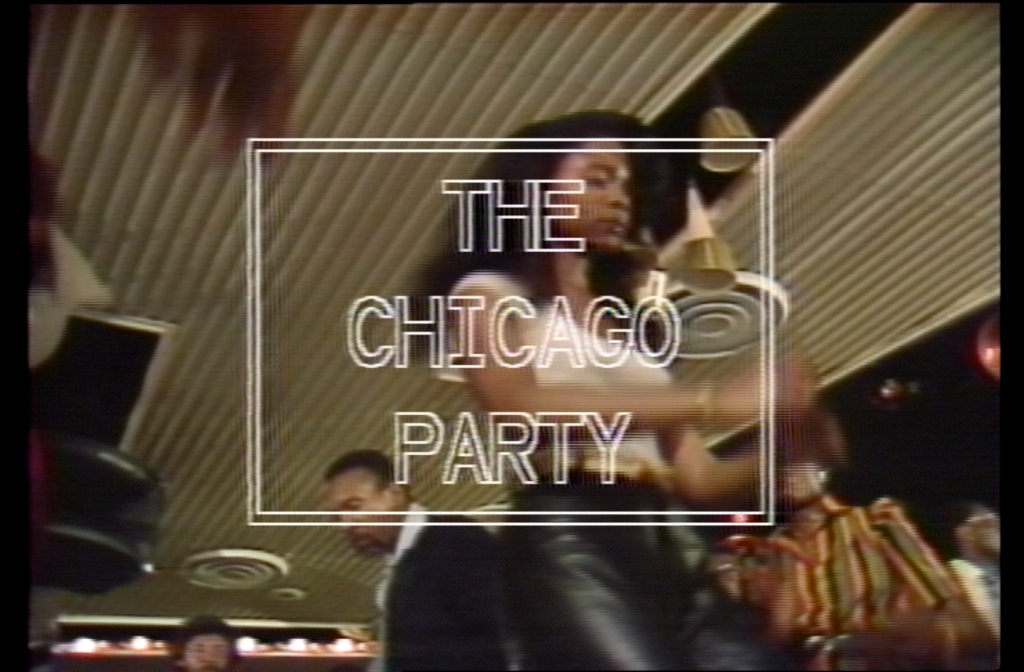
The Universal Togetherness Band’s activities outside the studio are documented in a scant stack of flyers and Polaroids, even though they performed live dozens of times. Just one of those performances, albeit one that was lip-synched and broadcast a single time on WCIU’s short-lived Soul Train follow-up The Chicago Party, was the only evidence required to track down Gibson and urge him to turn in his unfinished work.
Andre Gibson was born January 24th, 1956 at Presbyterian-St. Luke’s Hospital in Chicago. Andre’s most powerful musical memories were forged at Bronzeville’s family-friendly Regal Theater, a historic platform for up-and-coming acts. As a six-year-old, he witnessed a matinee performance by Jackie Wilson, and would return to the theater throughout his formative years to catch glimpses of Little Stevie Wonder and the Temptations. By 1962, the Gibson family had relocated from Hyde Park to the Washington Park Homes at 62nd and Wabash.
Perhaps most instrumental in Andre’s own musical maturation was his connection with Artie “Duke” Payne, a Betsy Ross Junior High math teacher who is better remembered today for his fondness for the bagpipes than arithmetic. Outside of the classroom, Payne served as a conventional reedman with Cadet recording artists Odell Brown and the Organ-izers..” Andre’s districted high school, Chicago Vocational School, launched a pilot program to institute a more progressive approach to music education. Under the leadership of Dr. Joe Miller and Dr. Harold Bray, the Vocademic Orchestra Program reinterpreted classical disciplines and combined them with the worlds of marching bands and jazz. Arriving from Betsy Ross merely a curious keyboardist, Andre would not only play organ in the jazz band, but mallet percussion in the marching band, cello in the orchestra, and flute in the concert band. Andre’s notable classmates included future television and film composer Kurt Farquhar, as well as bassists Angus Thomas and Darryl Jones, both of whom would later play with Miles Davis in the ’80s.
That fall, Andre migrated two hours southwest to Bloomington, Illinois, in pursuit of a Musical Therapy degree from Illinois State. Much like CVS, the curriculum at Illinois State was progressive. Under the leadership or Dr. Frank Suggs, the Black Art Jazz Performers incorporated elements of theater, dance, and music into their repertoire, and Suggs encouraged his participants to create original, experimental compositions. Jerry Milam’s Golden Voice Studios in rural South Pekin, Illinois.)
Andre got a job in research and development at CBS Musical Instruments, the firm responsible for the Fender Rhodes, Stratocaster, and Telecaster, as well as Rogers drum sets, Gemeinhardt flutes, and the Gulbransen organs. His days were spent building custom cabinetry for organ prototypes and stringing wires to circuit boards; the majority of his lunch breaks were spent jamming with musicians and engineers on whatever equipment was available. At the behest of coworker Jim Swoboda, Andre brought the entire Colorvision crew to his officemate’s residential studio in Chesterton, Indiana to record the dazzling “Dreamality,” a danceable odyssey clocking in at nearly eight minutes. Prompted by a tuition reimbursement program at CBS, Andre convinced his employers that his musical abilities would make him an asset during trade shows, where staffers were expected to dazzle vendors and competitors with demonstrations of their products. CBS bit, and in fall 1978, Andre enrolled at Columbia College in downtown Chicago. With two sets of brothers, all working toward one unified vision, Universal Togetherness Band was the name that seemed most appropriate for this kindred quartet.
At Columbia, Andre’s coursework included classes in entrepreneurship, sound engineering, and advertising. In a promotions class, he met Paul Hanover, a harmonica player and pianist, Andre and Hanover bonded in class, and Andre liked the prospect of writing harmonica leads for pieces in his rapidly expanding repertoire. After hearing a handful of Andre’s demo cassettes during a class critique, classmate Antoinette Rose Stern expressed interest in managing the group. It was well known within the department that Stern’s husband was Aaron Stern of the local promotions powerhouse Jam Productions.
While traipsing through the cafeteria in the spring of 1979, Andre spotted a flyer announcing that faculty from the engineering department were seeking bands to serve as specimens for recording majors needing to clock studio hours. Shortly after, UTB auditioned for Malcolm Chisholm, the pioneering instructor of Columbia’s sound engineering program. Born in Chicago in 1929, Chisholm served as an electronics technician in the Coast Guard before turning to the music business in 1955. He was well regarded for his stints at not only Universal, but Chess and Paragon, and was celebrated in the field for his humor and expertise, which carried over into influential articles, diatribes, and public rants. In the studio, he was a hard-nosed instructor who hovered over his pupils, relishing the teaching opportunities afforded by their missteps. It was a tough brand of love, and thin-skinned students fared poorly, as did those allergic to profanity. Andre embraced the unorthodox lessons in mixing and mic placement, and thrived under Chisholm’s direction and mentorship on both sides of Sessions occurred either at Chisholm’s alma mater, Universal Recording, or newcomer Zenith/dB. Universal was partnered with Columbia Records and serviced most major-label clientele throughout the Midwest. The state-of-the-art facility was situated in the heart of Chicago’s Rush Street district, home to some of the city’s most notorious nightclubs, and the surrounding streets were well-trodden by musicians, club-hoppers, and
As for Chisholm’s students, some preferred to track the same song as part of a classroom competition. Other teams favored a range of options. With Andre writing as many as five compositions a night, UTB had no shortage of material to audition for undergraduates. So long as Andre paid for the magnetic tape, the multitrack reels were his to keep.
Billed as “an original music band,” UTB began frequenting established venues across Chicagoland: Sauer’s, Gaspar’s, the Wild Hare, the Cubby Bear, Mother’s, Redford’s, and the Steel Worker’s Union Hall. Stern continued rubbing elbows with industry insiders, touting the merits of her lone client. Whether through her husband’s connections or her own, she secured an opening slot for the group when Peter Gabriel performed at Columbia College’s Showcase 1980, greatly increasing their visibility. Chicago Fest soon followed, and the Universal Togetherness Band rocked the rooftop stage at the easternmost point of Navy Pier.
Having been left out in the cold by their management and abandoned by Mercury, UTB decided to part ways with Stern. Subsidized recording sessions became less frequent after Andre halted his studies at Columbia. Now working as a market reporter on the Chicago Mercantile Commodities Exchange, he alone shouldered the burden of booking the band. The group recorded less, and performed less lucrative sets. UTB charter members began to lose focus.
The band was evolving from a star to a red giant when James Christopher approached Andre in late 1982 after a gig at the So Rare Dinner & Supper Club on 87th and Throop. Christopher and his business partner, Willie Woods, were known for mining talent for The Chicago Party, a weekly variety show broadcast on WCIU Channel 26 that featured a menagerie of dancers, magicians, musicians, contortionists, and break-dancing Jerry Lewis impersonators. The show was recorded at the Copherbox II, a popular nightclub at 117th and Halsted, which Christopher and Woods co-owned. Just as Yvonne Gage, Terry Genghis, and over a dozen others had done before them, UTB crossed the Copherbox II’s illuminated dance floor in hopes that someone out there—whether on the floor or at home on the couch—liked what they saw. Andre continued to jot “UTB” in the client field of self-financed studio sessions. Later entries in his songwriting portfolio, including “My Sentiments,” “More Than Enough,” and “Paper Chase,” reveal a more mature manifestation of the UTB sound before the group first crossed the studio threshold in 1979. His modified lineup of Frank Alexander on drums, Art Love on bass, and Allen Burroughs on guitar—along with Michael Young sweetening the stock with tasteful saxophone parts—showed promise. But these stringers soon settled into more profitable combos.
During their four years of studio immersion, the Universal Togetherness Band amassed a catalog of recorded material larger than most aboveground acts. Years later, long after the group’s disintegration, Andre began circulating cassettes featuring new self-produced tracks among his clients and colleagues at the Commodities Exchange, ignoring boxes of masterpieces from his college days all the while. Having outlasted the cassette era and thrived in the age of the compact disc, his newest contributions continue to beckon listeners via the online music megalith CD Baby. The steppers’ delights and digital ballads he concocts in his home studio still evoke the sounds and spirit of the breezeways in the Washington Park Homes, where his internal musical dialogue first began. Collectively dropping out, the Universal Togetherness Band followed a path of independent study unquantifiable in course hours or grade point averages. Above all, it reveals that the person who gained the most from these exercises in academia was Andre Gibson himself.
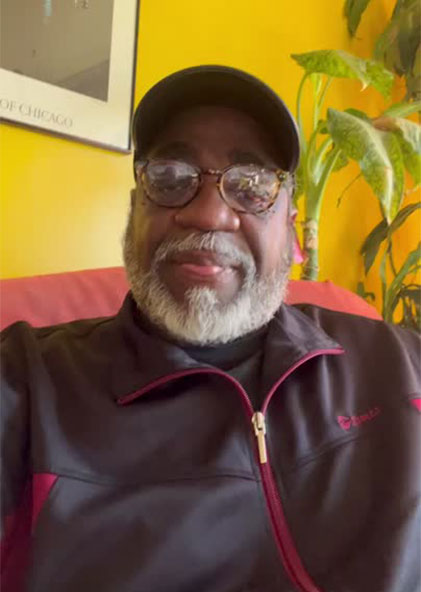
Currently Andre Gibson produces and performs original compositions using all streaming platforms such as Spotify, CDBaby, Apple Music and more to sell and promote his music. After partnering with the musical label Numero Group, Andre ultimately started his own Chiat Records Indie label as well as establishing relationships with publishers and curators to secure sync licensing deals on some of the popular tv shows such as the famed FX Snowfall, HBO Somebody Somewhere, Netflix Easy and more. Recently Andre became a voting Grammy member as well as a Grammy U Mentor with a young mentee guiding and supporting aspiring artist and songwriters.
- Jon Kirby (2014)
Between 1979 and 1982, The Universal Togetherness Band tracked unearthly portions of their sprawling songbook for bewildered students in Columbia College’s audio engineering program. Storming the gates of Chicago’s premier recording studios, the erudite party band explored permutations of soul, jazz-fusion, new wave, and disco with little regard for studio rates or the availability of magnetic tape.
Universal Togetherness Band captures the brightest, never-before-heard moments from this visionary group’s 5-semester recording bender. The attractive gatefold LP edition boasts magnificent reproductions of never-before-seen /images from the archives of Chicago photographer Steven E. Gross. The CD version features several candid snapshots from the group’s personal collections. Meticulously mixed from the original multi-track sessions by Sean Marquand (Phenomenal Handclap Band), Universal Togetherness Band is presented in peak fidelity.
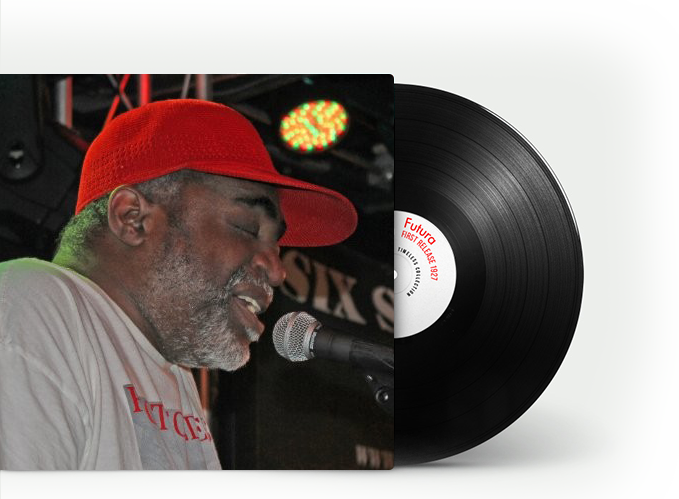
The band was started and lead by Andre Gibson.

Sign up for our newsletter to get up-to-date from us
